
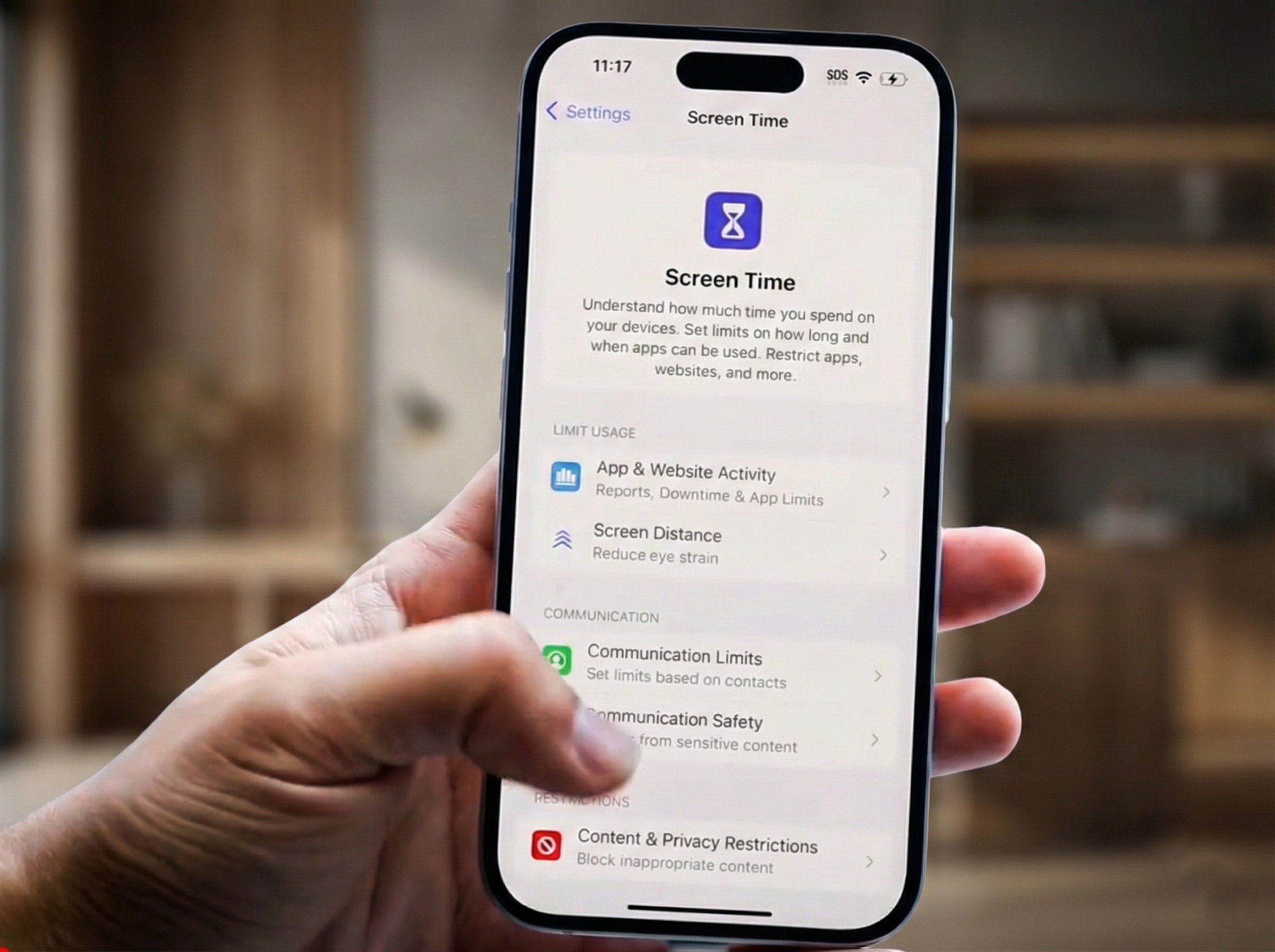
You know that awkward moment when your phone tells you your weekly screen time report, and the number looks like something only a cave troll could survive? And then, five seconds later, you open another tab on your laptop because — well, that’s what your job is. It’s strange: everyone talks about “reducing screen time,” but no one explains how you’re supposed to do that if you work eight hours on a screen, relax on a screen, and occasionally eat lunch while watching yet another screen.
It creates this low-level guilt, as if the amount of time your eyes spend glowing in blue light says something about your character. But the truth is much less dramatic. Modern life just… is screens. The real question isn’t “How do I eliminate them?” It’s “How do I stop feeling swallowed by them?”
The Problem Isn’t the Hours — It’s the Blur
People assume screen time is bad because of the total number of hours, but that number is misleading. What actually wears you down is the blurry, unbroken stream where work bleeds into doomscrolling, which bleeds into some halfhearted YouTube rabbit hole that you don’t even enjoy but keep watching out of inertia.
The exhaustion comes from the lack of edges — that feeling that your day is one continuous tab you can’t close. Eight hours of focused, contained work is manageable. Eight hours dissolved into fifteen different micro-distractions is something else entirely.
The 10% Shift That Changes More Than a “Digital Detox”
You don’t need a full break from screens. You need small pockets where you step out of the stream long enough to remember what your brain feels like without constant input. It can be tiny — almost laughably tiny.
For example: when I finish a task, I try not to immediately flip to another tab. I stand up for thirty seconds, refill a glass of water, even if I’m not thirsty. Somehow the next task feels less like swimming underwater. When you sprinkle these micro-pauses through the day, your screen time number doesn’t change — but your relationship to it does.
The Strange Magic of Changing Screens Instead of Escaping Them
This sounds counterintuitive, but switching the type of screen can be more refreshing than stepping away entirely. If your job is spreadsheets or code or documents, watching a video for six minutes can feel like exhaling. Conversely, if you’ve been scrolling endlessly on your phone, opening a proper laptop to read one article with actual paragraphs feels almost… grounding.
It’s not about purity. It’s about breaking the sameness before it flattens your mood.
Letting the Phone Live in a Different Room (Sometimes)
One of the few tricks that consistently works is putting the phone somewhere slightly inconvenient — not locked away, not exiled, just not within the gravitational pull of your hand. The kitchen counter instead of the desk. The hallway table instead of your pocket.
You still use it when you need to, but the reflexive checking drops. That tiny friction — the three extra steps — creates just enough space for your attention to stay where you meant it to stay.
The “Analog Islands” That Make Screens Less Overwhelming
Some people keep one or two things in their day deliberately analog: a notebook for to-do lists, a physical book next to the bed, a wall calendar for deadlines. Not because analog is morally superior, but because the brain reacts differently to objects you can touch. It gives your day small texture changes.
I scribble my daily tasks on a cheap paper pad. It takes ten seconds. But seeing my plans outside the glowing rectangle makes the rest of the workday feel a little more contained.
When You Should Actually Worry
The real red flag isn’t the number of hours. It’s when screens become the default filler for every spare moment. Waiting for the kettle? Phone. Standing in the elevator? Phone. Trying to fall asleep? Phone again, even though your eyes feel like overcooked pasta.
That’s the point where the screen stops being a tool and becomes the background noise of your mind. Not dangerous — just draining, the same way constant chatter in a room eventually wears you out even if no one says anything directly to you.
Maybe the Question Isn’t “How to Reduce,” but “Where to Reshape”
If your work depends on screens, your life will include screens. That’s not a failure — it’s the landscape. You’re not trying to shrink your digital life into some ideal number. You’re just trying to keep the edges visible, so your day doesn’t dissolve into one long scroll.
And on the days when you manage to close the laptop on time, put the phone a little farther away, and let your brain idle without the glow — even for a tiny moment — the whole world feels less pixelated. Not detoxed. Just slightly more yours.