
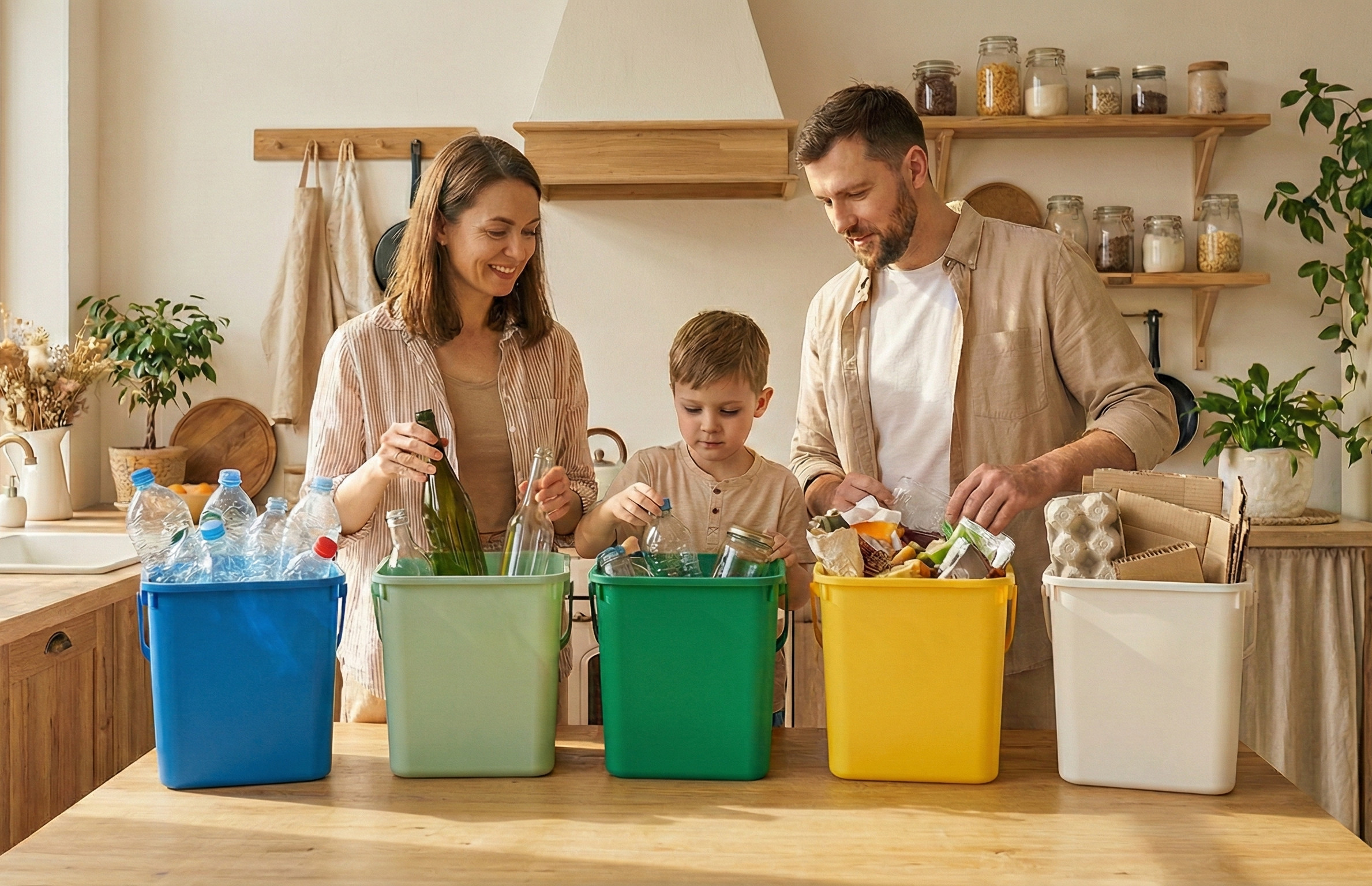
You know that small wave of guilt that hits when you see those perfectly arranged recycling setups online — the ones with identical glass jars, little wooden scoops, and a compost bin that somehow doesn’t look like a compost bin? Most of us like the idea of living greener, we really do, but many apartments are barely big enough for the regular trash can. Adding three more feels like turning your kitchen into the back room of a café.
I used to think I was terrible at this stuff. Every new eco trend felt like homework. Reusable everything, strict sorting rules, long lists of what goes where. Meanwhile, half of my plastic had no icon on it, and the building’s recycling chute was usually jammed by someone’s flattened TV box. That’s when it hit me: maybe the better question isn’t “How do I become zero-waste?” but “What’s the simplest version of this that still helps?”
The Myth of ‘Perfect Eco Living’
Perfection gets thrown around a lot in this space. Zero waste. Plastic-free. A kitchen with nothing disposable in sight. It’s inspiring until you try to recreate it and realize you don’t have the time or the square footage. Even if you did, your building’s infrastructure just might not care. Some places collect only glass and paper. Some don’t collect anything at all, which makes the entire sorting effort feel like folding laundry during a power outage.
I once tried to set up a whole recycling station behind the fridge. It lasted three days. Then a bag ripped open, the floor ended up dotted with bottle caps and sticky plastic, and I decided to scale back before losing my mind.
Small Habits That Actually Do Something
Here’s the odd thing: the habits that help the most are usually the least glamorous. Using things longer than expected. Buying fewer items that break after one season. Not upgrading appliances unless they truly give up. It’s not photogenic — there’s no marble countertop with matching containers involved — but it’s realistic.
Even switching to larger refill bottles for soaps and detergents cuts down a surprising amount of waste. They’re not cute, but they work. Same with repairing something small instead of panicking and replacing it. A screwdriver and a bit of stubbornness often beat buying a “sustainable” new version of the same product.
The Invisible Side of Sustainability: Energy
For all the focus on bins and bags, the biggest environmental impact in most homes comes from energy use. The small adjustments here feel boring, but they matter more than separating every plastic fork into its designated species. Not leaving lights on everywhere, for instance, or keeping devices from charging all night just because it’s convenient. None of this feels like saving the planet — it just feels like avoiding annoying bills — but both outcomes work in your favor.
Even the weird little things help. My kettle used to scream like it was preparing for takeoff, and replacing the seal made it heat faster and quieter. Less power used, fewer nerves lost. Win-win.
Being Eco-Friendly Without Rearranging Your Entire Home
You don’t need a Pinterest-ready recycling station to do your part. You need habits that fit inside your actual life, not the life the internet imagines for you. A couple of well-placed canvas bags near the door so you stop collecting plastic ones. One decent water filter instead of endless bottles. A mental note to buy food you’ll actually finish instead of the optimistic vegetables that always die in the crisper drawer.
It turns out you can care about the planet without turning your apartment into a sustainability showroom. You just pick the things you can stick to. And ignore the bins you secretly hate. The planet won’t mind.