
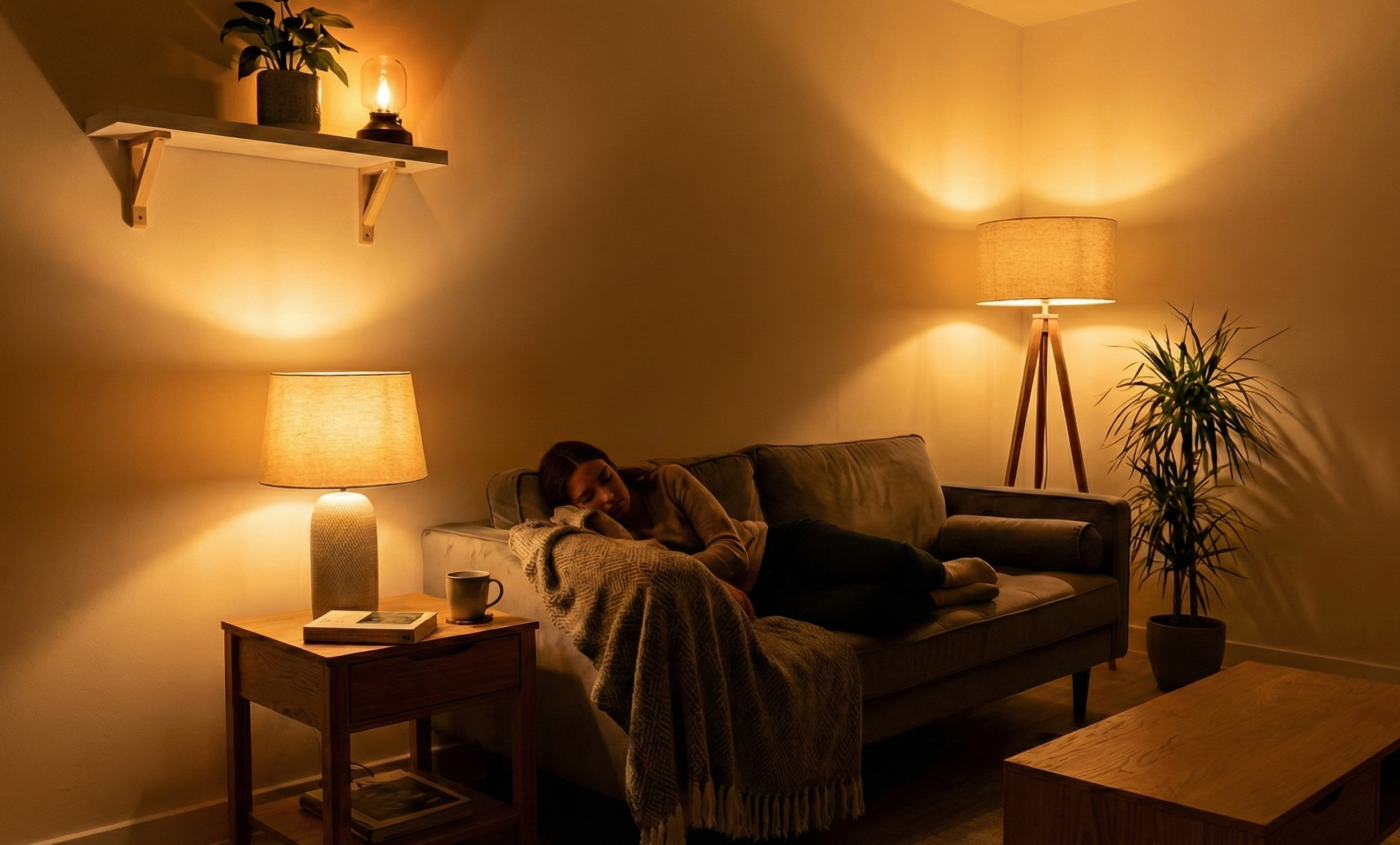
You know that specific, sterile feeling you get when you walk into an apartment and someone flips on the overhead switch? We call it the "Big Light." Suddenly, the room is flooded with a flat, aggressive glare. The dust on the floorboards becomes high-definition, the expensive velvet sofa looks kind of cheap, and everyone’s face takes on the pallor of someone who hasn’t slept in three days.
We spend a surprising amount of mental energy on furniture. We agonize over whether the rug matches the curtains or if the coffee table is "too mid-century." But here is the truth: you can fill a room with designer pieces, and if you light it like a dental clinic, it’s going to feel like a dental clinic.
Lighting is the invisible architecture of a home. I’ve seen college dorm rooms with nothing but a beanbag and a well-placed floor lamp that felt more inviting than luxury penthouses. It’s not about the stuff you buy; it’s about how you choose to reveal it.
Shadows Are Essential (Really)
The problem with ceiling fixtures isn't just that they are bright; it’s that they are uniform. They blast light from the top down, filling in every crack and crevice. It flattens the room. It’s visual noise.
Lamps, on the other hand, introduce shadows. That sounds like a bad thing—usually, we want to see things, right? But shadows create depth. A lamp in the corner feathers the light out, catching the texture of a throw blanket or the grain of a wood table, while letting the mess of cables behind the TV fade into the dark. It tells the eye where to look.
It creates intimacy, too. A ceiling light claims the whole room. A table lamp only claims a five-foot radius. When you sit in a chair next to a lamp, you feel contained in that little pool of light. It’s cozy. Under the "Big Light," you just feel exposed.
The Color Temperature Mistake
This is where most people accidentally ruin their vibe. You run to the hardware store, grab a pack of bulbs because they were on sale, and suddenly your living room feels like a hospital hallway.
Light has a temperature. Most standard overhead bulbs are 4000K or 5000K (often labeled "Daylight"). This light is blue-tinted and clinical. It’s great for performing minor surgery or finding a lost contact lens, but it’s terrible for relaxing. It signals your brain that it’s noon on a Tuesday.
Lamps give you control. If you swap those out for warm bulbs (2700K), everything shifts. The light becomes golden. Skin looks better. Food looks more appetizing. You physically feel your shoulders drop because your biological clock finally gets the signal to wind down.
Zoning Without Walls
If you live in a modern apartment, you probably have an "open plan" layout. The kitchen is the living room is the dining room. It’s efficient, but it can feel unstructured.
You can’t build walls, but you can use light to delete parts of the room you’re done with.
- The "Office is Closed" Move: If you work at your dining table, turn off the bright overhead task light the second you close your laptop. Switch on a floor lamp by the sofa. You have effectively "left" the office.
- The Dirty Kitchen Trick: If you cooked dinner and didn't clean up instantly, leave the kitchen lights off. Use the lamps in the living area. If you can’t see the stack of pans in the dark corner, they don’t exist—at least until tomorrow morning.
The Cheapest Renovation
Furniture is expensive, heavy, and a nightmare to move. If you decide you hate your couch, you’re stuck with it for a while. Lighting is low-stakes.
You can completely change the character of a space for the price of a thrift store lamp and a smart bulb. You can move the light source three feet to the left and change the focal point of the room. It’s a playful way to experiment with your home without committing to a renovation.
There is also a nice ritual to it. Walking around the apartment at sunset, clicking on three or four small lamps, feels like tucking the house in. It marks the transition from the chaotic, bright outside world to your own slower, softer space.