
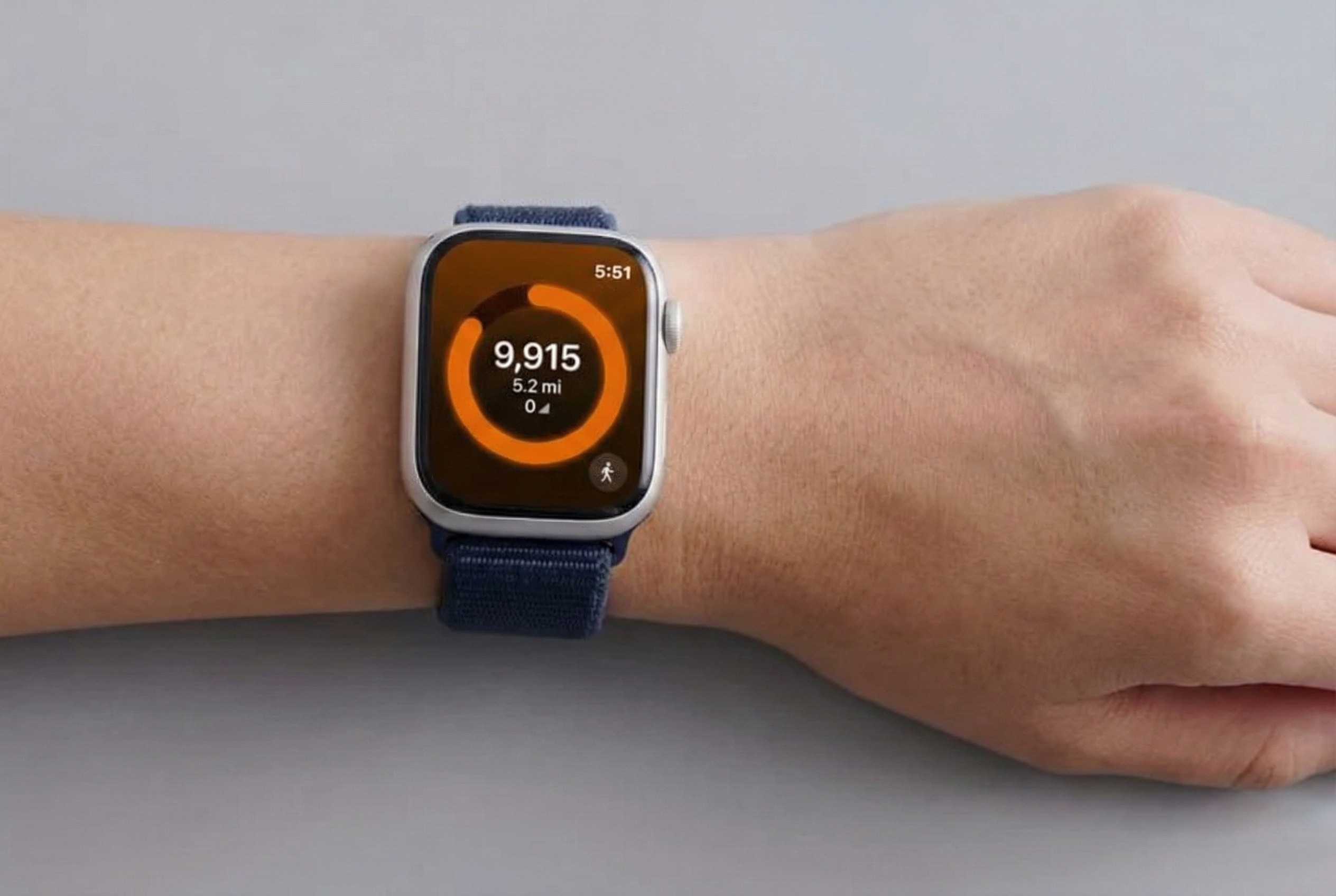
You’ve probably had this moment: it’s late, you’re brushing your teeth, you glance at your watch and see 9,842 steps. And then you’re wandering around the hallway like someone looking for their keys, just to make the counter tick past ten thousand. It’s funny how a number that didn’t even come from medicine somehow turned into a little daily ritual for half the planet.
The strange part is that most people aren’t sure where this number came from or whether it actually maps to anything real. It just sits there in our apps like a default expectation. Let’s take it apart a bit, without turning it into a lecture.
That oddly satisfying number wasn’t invented by doctors
The short version: it was a marketing idea. In the 1960s, a Japanese company released a pedometer with a name that roughly meant “10,000-step meter.” That’s it. No secret lab, no committee of scientists. The number looked nice and round, almost ceremonial, and people kept repeating it. Humans are weirdly loyal to round numbers. If the device had been named after 8,500 steps, we’d probably all be chasing that instead.
Only after the number got popular did researchers start looking at it more seriously. And nothing magical popped out. Walking more helped, yes. But there wasn’t a dramatic curve that suddenly flipped at exactly 10,000. The number survived mostly because it was catchy and not wildly unrealistic. You can picture yourself hitting it on a good day, which helps.
What 10,000 steps feel like inside your body
For most people, that’s about 7–8 km. Enough to notice, not enough to brag about. If you’ve ever spent a day running errands—grocery store, a couple of metro rides, some wandering—there’s a good chance you hit this number without thinking about it.
At that level of movement, your body quietly does its housekeeping. Blood sugar peaks aren’t as dramatic. Your legs stop feeling like furniture. You fall asleep faster, not because you performed some heroic workout, but because you actually moved around like a human. Even digestion behaves better, though nobody advertises walking as a digestive aid for some reason.
What usually doesn’t happen: huge weight changes. Walking burns calories, but not enough to undo a bakery run. Its strength is in keeping you from sliding into the “barely-moving” zone. That zone is where trouble builds up slowly—stiffness, low energy, blood sugar creeping higher each year.
Do you actually need 10,000?
Here’s the funny twist: a lot of the benefits show up earlier. Somewhere around 5,000–7,000 steps, many people already get noticeable improvements, especially if they used to move very little. Going beyond that adds more, but not in a dramatic staircase way. More like: “yeah, still good, keep going if your knees agree.”
So someone who consistently gets 7,000 steps is not “short of the goal.” They’re already in the zone where your heart, blood vessels, and general stress levels say “thanks, that’ll do.” Your watch might sulk, but your body isn’t keeping score in thousands.
When chasing the number becomes its own sport
There’s a thin line between motivation and just trying to appease the device. If you’ve ever done slow circles around the kitchen at 11:30 p.m., you know what I mean. At that point, the step count stops being about movement and becomes a weird nightly obligation.
And not everyone benefits from pushing toward five digits every day. If you’re recovering from an injury, dealing with joint issues, or juggling a schedule that barely leaves space to breathe, then forcing 10,000 can backfire. Some people end up with knee pain or fatigue that wipes out their motivation entirely. Small-but-regular movement wins against heroic streaks every single time.
What walking consistently actually gives you
If you ignore the magic number for a moment, walking does a bunch of low-key things that don’t make headlines but matter quietly. It breaks up long sitting stretches. It nudges your brain out of that foggy “tab-switching” mode. Ideas tend to unstick during a walk—not because walking is mystical, but because you stopped staring at glowing rectangles for a moment.
There’s also the “seeing your own neighborhood again” effect. A 20-minute walk is often the only part of the day where you aren’t multitasking. Even if your phone tracks the steps, it doesn’t demand your full attention. That small mental space is worth more than people assume.
If you often land somewhere near 9–11k steps without forcing it, you’re already doing plenty. If you hover around 5–7k, that’s also a solid place to be, especially if it’s consistent rather than heroic.
So what goal makes sense?
Probably something more personal than the default. A number you can hit on a bad day without turning your evening into a pacing session. A number that lets you feel human instead of “behind schedule on your steps.”
- If you’re around 3,000, nudging up to 4,500–5,000 already changes how you feel by the end of the week.
- If you’re in the 5–6k zone, adding a couple of short walks gets you into the “very decent” category.
- If you naturally reach 9k or more, no need to chase extra digits unless you enjoy it.
The 10,000-step rule stuck mostly because it was catchy and easy to remember. The real point isn’t the number, but the direction: more movement than yesterday, most days, without making your life revolve around it. The counter helps track the trend, not define your worth.