
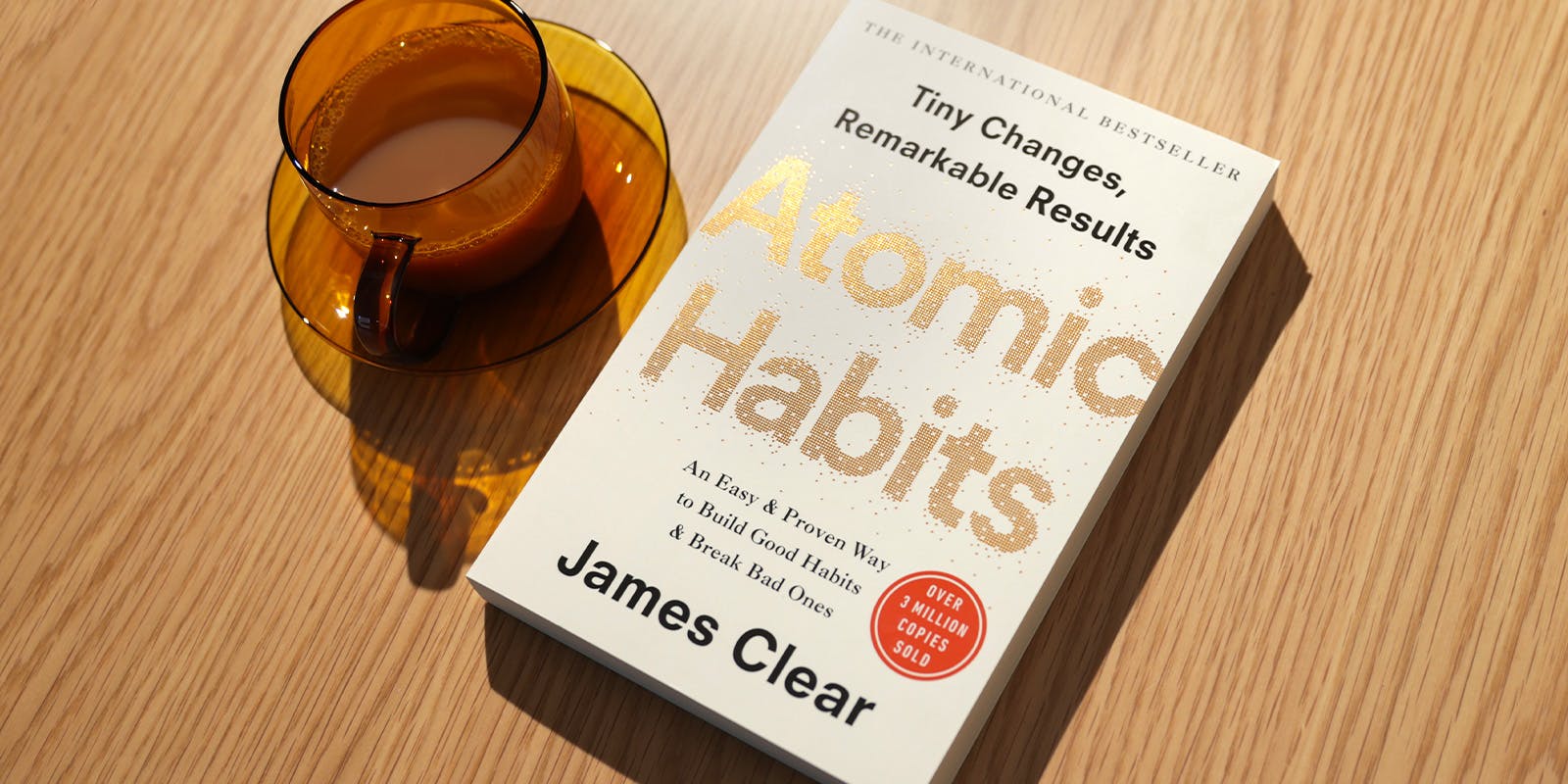
It’s hard to avoid this book. Someone eventually recommends it — a coworker, a cousin, a friend who suddenly starts waking up at 6 a.m. with suspicious enthusiasm. And to be fair, Atomic Habits blew up for a reason. Parts of it feel like common sense finally written in a clean, digestible way. But other parts… well, they sound great until real life walks in wearing sweatpants and ruins the experiment.
I like the idea behind the book — small changes that stack over time. It’s comforting. But if you strip away the slogans and neat diagrams, some advice holds up beautifully, while other ideas collapse the moment your day gets even slightly chaotic. Here’s the version that survives actual life.
What Actually Works: The Tiny, Almost Embarrassing Steps
The whole “make it easy” rule is stronger than any motivational speech. The book is full of tiny adjustments: putting running shoes by the door, laying out gym clothes, leaving your water bottle on your desk. They sound trivial until you try them and realize how much friction tiny decisions create.
I once started flossing daily not because I became disciplined, but because I put the floss next to the hand soap instead of in a drawer that required a small excavation. Sometimes the trick genuinely is that simple.
The Habit Loop Is Real — Just Not as Clean as the Book Pretends
The cue → routine → reward idea makes sense in a textbook diagram. You finish dinner (cue), clean the kitchen (routine), feel calm (reward). But in reality, cues are chaotic. Sometimes the cue is boredom, or stress, or that slippery “I’ll just check my phone for a second” feeling.
The general pattern still works, though: replace one automatic reaction with a slightly better one. Even if it doesn’t feel elegant, it counts.
The Environment Tricks Are Surprisingly Powerful
This is probably the strongest idea in the book: your surroundings shape your behavior more than your willpower does. If snacks live on the counter, you eat them. If your phone sleeps next to your pillow, you scroll at midnight. If your desk looks like a cable graveyard, focus evaporates.
Changing the environment is easier than changing the mind. Moving my phone charger to another room helped my sleep more than any meditation app. Hiding chips behind a mixing bowl made me stop eating them “accidentally.” These kinds of adjustments work embarrassingly fast.
What Doesn’t Work: The Identity Shift Stuff
This is the line everyone quotes: “Become the type of person who…” In theory, identifying as a runner makes you run more, identifying as a writer makes you write more. It’s poetic. But identity isn’t a switch — it’s a lagging indicator.
You don’t declare yourself a runner. You just run a bit until it stops feeling strange. Forcing an identity too early often backfires. You feel like a fraud, and then you quit. The habit has to come first; the identity shows up later, quietly.
The “Don’t Break the Chain” Rule Sounds Good But Breaks Easily
Consistency is great until you get sick, or overwhelmed, or simply have a weird week. Tracking streaks works until one broken day feels like failure — even when it’s completely normal.
Most people don’t need a perfect chain. They need to return to the habit after messy days without punishing themselves.
The 1% Improvement Rule Is True — But Overrated
The math is satisfying — tiny improvements add up. But this only works for skills you intentionally practice: writing, running, cooking. It doesn’t magically fix habits you do on autopilot. Drinking more water or avoiding late-night snacks isn’t a “1% improvement” problem. It’s an emotional-habit problem.
So What’s Left When You Strip the Book Down?
A small set of principles that actually survive real life:
- Make tasks easier so your brain stops negotiating.
- Shape your environment instead of relying on discipline.
- Use tiny cues to nudge yourself into motion.
- Allow inconsistency without guilt.
This version of Atomic Habits works because it doesn’t depend on ideal conditions. It fits into chaotic, unpredictable days — the days when you eat lunch at your desk, forget where your water bottle is, and tell yourself you’ll “start properly tomorrow.”
The real strength of the book isn’t turning you into a hyper-optimized machine. It’s making everyday tasks slightly more doable. And in a world where everything competes for your attention, “slightly easier” is already a win.